Age estimation — a soft signal, read on your device
A Vision Transformer, fine-tuned on faces, takes a single frame and scores it across
9 age buckets — 0-2, 3-9, 10-19,
20-29, 30-39, 40-49, 50-59,
60-69, 70+ — then folds the distribution into one expected-age number.
Drop a photo or use your camera; the read happens entirely in this tab.
No frame is ever uploaded or stored.
Be honest about what this is: a guess at apparent age from pixels. It is
imperfect, it carries demographic bias (accuracy varies across
skin tone, lighting, expression, and makeup), and it is not identity, verification,
or a birth date. Treat it as a soft signal for low-stakes, consented UX — never a verdict about a
person. The page shows the real output, right or wrong — never a canned answer.
ViT-B/16 (86M params), 224×224 input — a fine-tune for facial age
Labels
9 age buckets: 0-2, 3-9, 10-19, 20-29, 30-39, 40-49, 50-59, 60-69, more than 70
Quantization
q8 (8-bit) ONNX
Backend
WebAssembly (runs anywhere; no WebGPU needed)
Download
~88 MB, cached after first load
License
Base model: nateraw/vit-age-classifier (see model card)
Privacy
All inference is local; the camera frame / photo never leaves your device and is not stored.
Web APIs
WebAssembly, Web Workers, getUserMedia (camera), Canvas, FileReader — all Baseline widely available
Run it
Use your camera, pick a sample face, or drop your own photo, then read the estimate. The bars are the softmax across all 9 buckets, shown youngest → oldest.
🔒 Frames are read locally and never uploaded or stored.
Drop a face photo, or click to choose
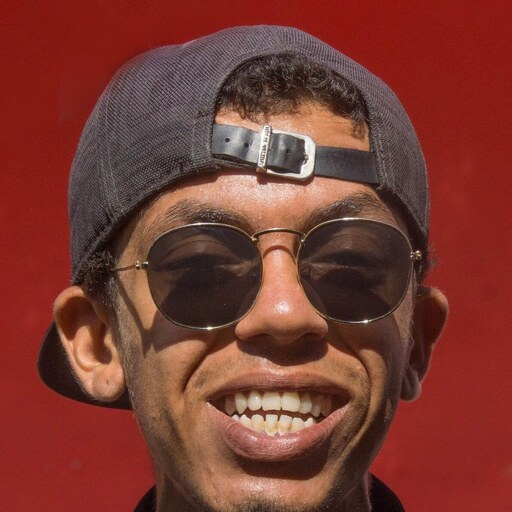
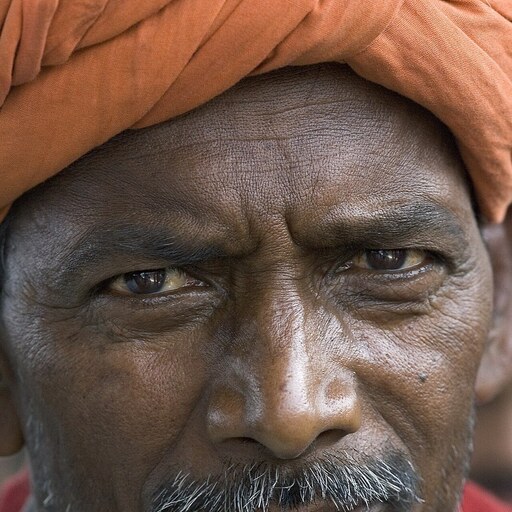
Sample faces are licensed portraits from Wikimedia Commons (CC-BY-SA / public domain) — see the Image credits page.
–
backend –latency –buckets –
See inside
The ViT's final layer emits one raw score — a logit — per bucket. A
softmax turns the 9 logits into probabilities that sum to 100%. The
expected age above is Σ (probability × bucket midpoint) — it
respects the whole distribution, not just the top bucket, which is why it can land between the
bucket edges. Two numbers describe the shape of that distribution: the
top-1 margin (how far the winning bucket leads the runner-up) and the normalised
entropy (0 = certain, 1 = torn between buckets). A clear, well-lit face is peaky
and low-entropy; an occluded, angled, or blended one is flat and high-entropy — exactly when you
should NOT trust a single number.
Estimate an age to see the raw numbers.
Bucket
midpoint
logit
softmax
expected age –top-1 margin –entropy (0–1) –
Calibration (uncertain ← → confident):
Why it matters
"Estimate age from a face" used to mean uploading the photo to a cloud API — a privacy non-starter
for something this sensitive. Running the model locally flips that: the frame never leaves the
device, so age-aware UX becomes something you can actually ship without collecting a single image.
Age-appropriate UX (as a signal) — nudge toward a simpler or safer default when the estimate skews young/old, then let the user confirm — never a hard gate on the number alone.
Analytics without faces — approximate audience age distribution for a kiosk or display entirely on-device, storing only the bucket, never the image.
Consented, private demos — "guess my age" games, avatar age-matching, or research tools where the raw frame stays local.
Calibration-gated decisions — use the entropy/margin read-out to act only on confident reads and defer ambiguous ones to a human or an explicit prompt.
A note on ethics + the law: apparent-age models are imprecise and biased, and
real age-verification (for restricted goods, adult content, or legal thresholds) has specific
regulatory requirements this cannot meet. Use it for consented, low-stakes UX — never surveillance,
discrimination, or as the sole basis for a legal age decision.
This page goes one level deeper for "See inside": instead of the pipeline it runs the model's own
processor then model() in a single forward pass, so it can read the raw
logits tensor and compute the softmax, the probability-weighted expected age, and the
entropy/margin itself. Webcam frames are captured to a <canvas> and classified as
a data URL — nothing is uploaded. Inference runs in a Web Worker so the camera preview never stutters.