AI-generated image detector — real photo, or made by a model?
A Swin Transformer fine-tuned to sort images into artificial (AI-generated /
synthetic) and human (a real photograph). Drop an image and it returns a probability
for each. Treat the number as a signal for triage — a reason to look closer — not
proof of where an image came from. It has real blind spots, and this page shows them. Everything
happens on your device; the image is never uploaded.
image-classification · single-label (softmax over 2 classes)
Labels
artificial (AI-generated) / human (real photo)
Architecture
Swin Transformer (hierarchical vision transformer) fine-tuned for AI-image detection
Quantization
q8 (8-bit) ONNX
Backend
WebAssembly (runs anywhere; no WebGPU needed)
Download
~89 MB, cached after first load
License
Apache-2.0 (ONNX conversion by onnx-community)
Web APIs
WebAssembly, Web Workers, FileReader — all Baseline widely available
Read this first. No AI-image detector is reliable. This one is a fine-tuned
classifier trained on a specific mix of real and generated images — it will mislabel photos it
finds "too clean" and miss generated images that look photographic. Never make an accusation or an
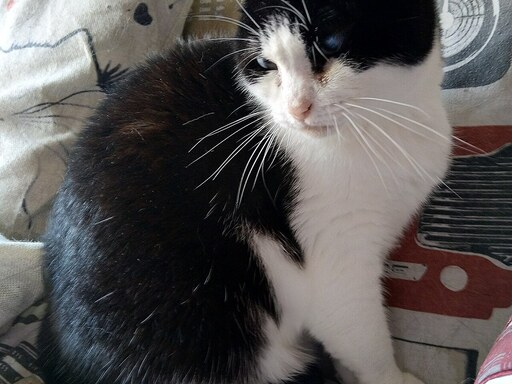
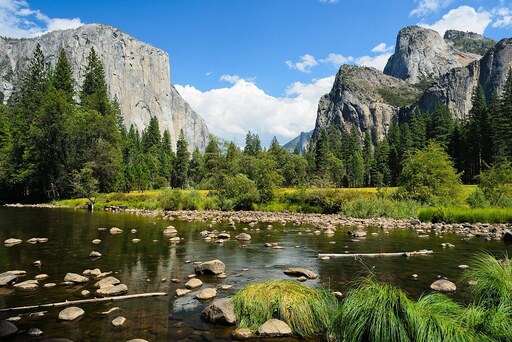
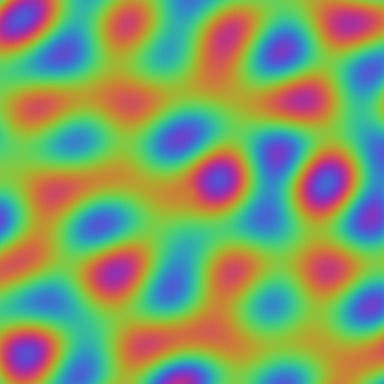
automated block on its output alone. The bundled samples are two real photographs and one
procedurally-generated pattern (computer graphics, not a diffusion model), chosen to show
both a true and a false-ish call.
Run it
Pick or drop an image, set how much "AI-generated" probability should raise a flag,
and hit Analyse. The verdict is a policy on top of the model's score: flag for review when the
AI-generated probability is at or above your threshold.
Drop an image here, or click to choose
–
real photoAI-generated
backend –latency –
See inside — score vs. certainty
The model outputs two raw logits; a softmax turns them into two
probabilities that sum to 100%. A high number is the model's confidence, and that is not
the same as being calibrated — these detectors are notorious for being confidently wrong.
A 99% "AI-generated" score is a strong prompt to look closer, never a certificate. The
threshold is your policy: lower it to catch more suspected AI images (more real
photos wrongly flagged), raise it to only flag the blatant cases (more AI images slip through).
There is no universally right value — it depends on what a mistake costs you.
Analyse an image to see the raw numbers.
Class
logit
softmax
AI-generated probability along the real→AI scale (needle):
Calibration caveat: softmax confidence is
not accuracy. Treat any single score as one weak piece of evidence — corroborate with metadata,
reverse image search, and provenance standards (C2PA) before you act.
Why it matters
As generated images flood feeds, marketplaces, and evidence, "was a human behind the camera?"
becomes a routine question. A fast, private, offline signal — running before an image is trusted,
published, or paid for — is a first triage filter: it decides what to look at harder, not
what is true. No API bill, no third party seeing the image, low enough latency to run inline.
Moderation triage — auto-route "likely AI-generated" uploads to human review instead of blocking blindly.
Marketplace & stock screening — flag listings whose "real photo" claim is worth a second look.
Newsroom & OSINT intake — surface suspicious images in a batch so an analyst spends time where it matters.
Private-by-default — screen sensitive imagery on-device, with no upload and no cloud detector.
All of these are signal, not verdict use cases. Anywhere
the cost of a wrong call is high (accusations, takedowns, legal), a probability from one model is
never enough on its own.
This page goes one level deeper for "See inside": instead of the pipeline it runs the model's
processor then model() in a single forward pass, so it can read the raw
two-value logits tensor and compute the softmax itself — then apply your
flag threshold. Same weights, same result. Inference runs in a Web Worker so the page never janks.