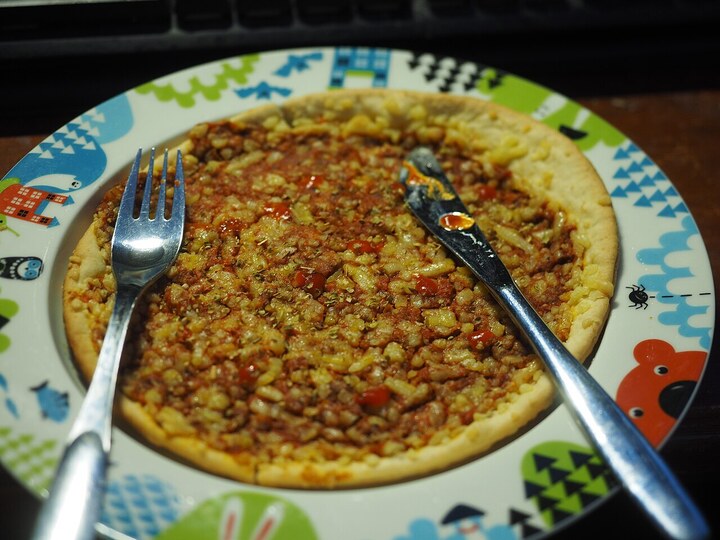
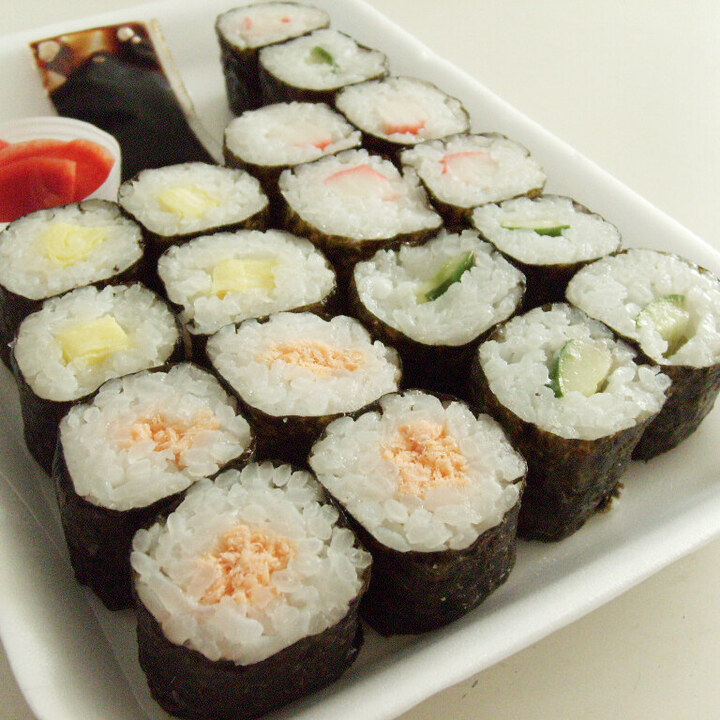
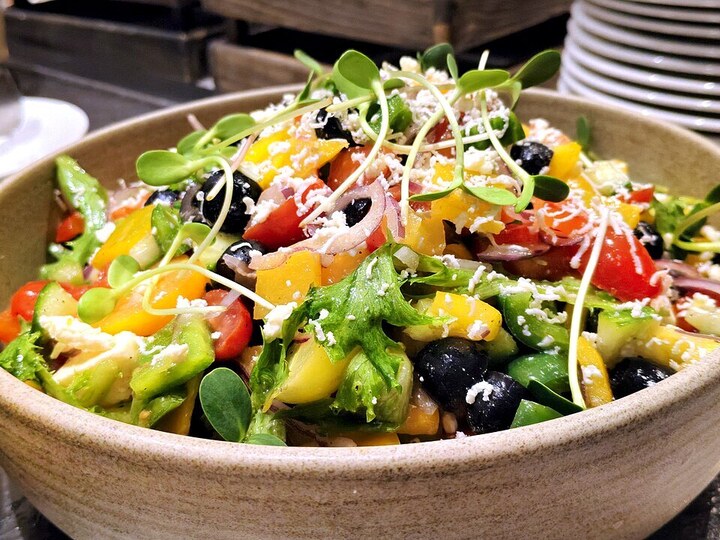
A Swin Transformer fine-tuned on the Food-101 dataset. Give it a plate — a slice of
pizza, a bowl of ramen, a wedge of tiramisu — and it reads
the fine-grained texture (crumb, char, garnish) to pick one of 101 dishes, with a probability for
each. It runs entirely on your device: the photo never leaves the tab.
Swin Transformer (base) — hierarchical shifted-window attention, fine-tuned on Food-101
Labels
Food-101 — 101 fixed dish classes (apple pie → waffles)
Quantization
q8 (8-bit) ONNX — model_quantized.onnx
Backend
WebAssembly (runs anywhere; no WebGPU needed)
Download
~93 MB, cached after first load
License
Apache-2.0
Web APIs
WebAssembly, Web Workers, FileReader — all Baseline widely available
Run it
Pick or drop a food photo and hit Identify. The bars are the softmax over Food-101's 101 dishes — only the top few are shown, but they're drawn from the full distribution.
Drop a food photo here, or click to choose
5 dishes
backend –latency –dishes –
See inside
The model's final layer produces one raw score — a logit — for each of the 101
dishes. A softmax turns those logits into probabilities that sum to 100%. The
table shows the top dishes with their raw logit next to the softmax probability. Below it, two
numbers describe the shape of the whole distribution: the top-1 margin
(how far the winner leads the runner-up) and the normalised entropy (0 = the
model is certain, 1 = it's spread thin across many dishes). A clear plate of sushi is peaky and
low-entropy; a fusion dish or a messy crop is flat and high-entropy — and the runners-up are
usually its visual neighbours (a steak next to prime rib, a cupcake next to a red-velvet slice).
Run a classification to see the raw numbers.
Dish
logit
softmax
top-1 margin –entropy (0–1) –
Confidence (low ← → high):
Why it matters
A fast, private, offline "what dish is this?" is a building block for food apps, restaurant tools,
and health trackers — and it's a good example of a specialised classifier: it only knows
101 dishes, but within that world it's far sharper than a generic 1,000-class ImageNet model,
because every one of its classes is a food.
Menu & nutrition tagging — auto-label a photo as ramen or caesar_salad and look up a calorie/macro estimate client-side, before anything is uploaded.
Food-diary logging — snap a meal and pre-fill the diary entry with the dish name and a confidence, so the user only confirms rather than types.
Restaurant & delivery catalogues — tag and de-duplicate dish photos, or check that an uploaded menu image actually shows the dish it claims to.
Confidence gating — use the entropy/margin read-out to auto-accept the easy plates and escalate the ambiguous ones to a human or a bigger model.
This page goes one level deeper for "See inside": instead of the pipeline it runs the model's own
processor then model() in a single forward pass, so it can read the raw
logits tensor (all 101 dishes) and compute the softmax, entropy, and margin itself.
Same weights, same result — just keeping the intermediate numbers. Inference runs in a Web Worker
so the page never janks. Labels come back snake_cased (baby_back_ribs); the page
pretty-prints them.