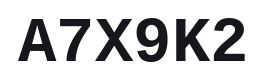
MGP-STR is a scene-text recogniser: give it a cropped single word —
COFFEE, STOP, a serial number — and it reads it back. The twist: a
single Vision Transformer predicts the word three ways in parallel —
character by character, as BPE subwords, and as WordPieces — then fuses the
three into one answer. All on your device.
image-to-text (scene-text recognition), via MgpstrForSceneTextRecognition + MgpstrProcessor
Architecture
ViT encoder → three parallel prediction heads (character / BPE / WordPiece) → A³ multi-granularity fusion. Single forward pass, not autoregressive.
Input
One cropped word (crop tight — MGP-STR reads a single word, not a line or paragraph)
Output
The recognised word + a fusion confidence, plus each head's own reading
Quantization
q8 (8-bit) ONNX
Backend
WebAssembly (runs anywhere; no WebGPU needed)
Download
~155 MB, cached after first load
License
MIT (alibaba-damo/mgp-str-base)
Web APIs
WebAssembly, Web Workers, Canvas, FileReader — all Baseline widely available
How is this different from TrOCR? TrOCR reads a
whole line autoregressively (a decoder emits one token at a time). MGP-STR reads a
single word in one shot, and its answer is a vote across three granularities —
which is exactly what makes its "see inside" interesting.
Run it
Pick or drop an image, then drag a tight box around one word and hit Read.
MGP-STR is a single-word recogniser, so the crop is the point.
Drop an image here, or click to choose
Drag on the image to box a single word.
The recognised word appears here.
backend –fusion conf –latency –
See inside — three granularities, one vote
This is what makes MGP-STR distinctive. The same image features feed three heads
that spell the word out at different resolutions: a character head (one glyph at a
time), a BPE head (subword chunks), and a WordPiece head. When the word is
clean, all three agree. When it's stylised or partly hidden, they diverge — and the fusion picks
the most confident consensus. The ✓ marks the head the fused answer matched.
Read a word to see the three granularities and the per-character trace.
Three predictions
Character head, glyph by glyph
Each cell is the character head's top pick at that position; the bar under it and the % are its confidence. Low-confidence glyphs are where a stylised font trips the reader.
Why it matters
A text detector tells you where words are; a recogniser tells you
what they say. MGP-STR is the "read one word" half of on-device OCR — small, fast, and
robust to the messiness of real signage because it cross-checks three readings instead of
trusting one.
Read the physical world — a sign, a shopfront, a jersey number, a bib, a boat name — straight from the camera, no OCR API and no upload.
Codes and identifiers — serial numbers, SKUs, licence-plate characters, container IDs: short single "words" are exactly MGP-STR's wheelhouse.
Pair with a detector — a detector finds every word box; MGP-STR reads each one. That's full scene OCR that never leaves the device (see the multi-model demo).
Legible confidence — the three-way vote is a built-in reliability signal: agreement means trust it, divergence means flag it for a human.
MGP-STR isn't the plain image-to-text pipeline — it uses its own processor + model, three lines with Transformers.js:
import { MgpstrForSceneTextRecognition, MgpstrProcessor, RawImage }
  from "@huggingface/transformers";

const model = await MgpstrForSceneTextRecognition.from_pretrained(
  "onnx-community/mgp-str-base", { dtype: "q8" });      // ~155 MB, cached once
const processor = await MgpstrProcessor.from_pretrained("onnx-community/mgp-str-base");

const image  = await RawImage.read(wordCropURL);        // ONE word, cropped tight
const inputs = await processor(image);
const { logits } = await model(inputs);                  // [char, bpe, wp] logits
const out = processor.batch_decode(logits);
// out.generated_text → ["coffee"]  (the FUSED answer)
// out.char_preds / out.bpe_preds / out.wp_preds → each head's own reading
// out.scores → [0.9999]  (fusion confidence)
For "See inside", this page reads the char_logits tensor directly — a softmax per
position gives the per-character confidence trace — and computes a comparable confidence for the
BPE and WordPiece heads, all off the main thread in a Web Worker. Note: MGP-STR
normalises to lowercase and its charset is a–z + 0–9; it reads a single
word, so crop tight and box words one at a time.