See inside
A VLM doesn't "see" — it reads a sequence of tokens where your image has been turned into a block
of vision tokens and slotted into a chat template. Phi-3.5-vision uses an HD image
transform: it splits each picture into a grid of 336×336 crops plus a global thumbnail, so
a detailed chart or a dense page becomes hundreds of image tokens (its edge on OCR and
fine print). In the prompt you write <|image_1|>; the processor expands that to
the right number of <|image|> tokens and negates their ids so the decoder splices
in the real vision features. Below is the exact templated prompt, the live
image-token count, and the token stream with per-token timing.
Constructed chat template
Run a generation to see the templated prompt.
Token stream (value · ms since start)
Tokens appear here as they're generated.
Why it matters
Phi-3.5-vision is the "reasoning reader": small enough to run in a tab, but tuned to pull structure
out of charts, tables, and documents — and to look at several images together. Running that
privately, offline-capable, and free per call turns a lot of server-side document and analytics
plumbing into a client-side primitive.
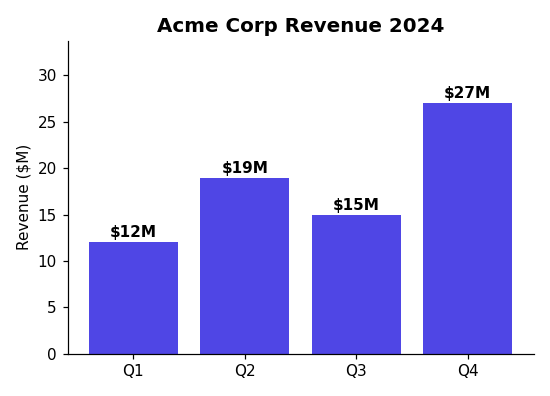
- Chart & dashboard Q&A — drop a chart or KPI screenshot and ask "which quarter was highest?", "what's the trend?" — the numbers never leave the device.
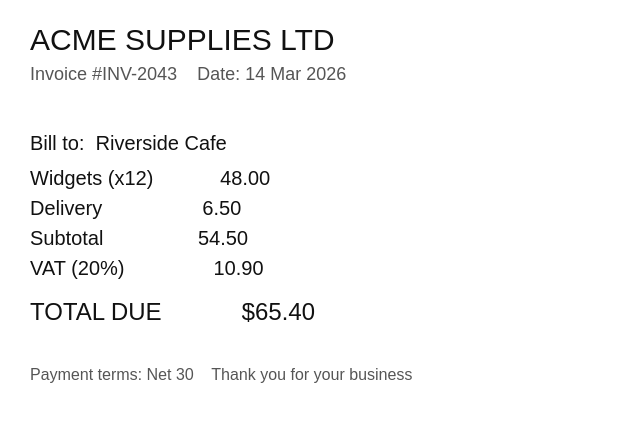
- OCR with reasoning — transcribe a receipt or form and interpret it: total the line items, spot the empty field, translate a sign.
- Multi-image comparison — hand it two screenshots, two receipts, or before/after frames and ask what changed — genuine multi-frame input in a small model.
- Accessibility copilots — describe complex figures and read dense text aloud for users who need it, with no per-image API cost.
How the API works
Phi-3.5-vision in Transformers.js is a causal-LM VLM (Phi3VForCausalLM). You write
<|image_N|> placeholders in the message, template it, run the processor over the
templated text plus the image(s), then generate — streaming tokens as they come:
import { AutoProcessor, Phi3VForCausalLM, RawImage, TextStreamer }
  from "@huggingface/transformers";

const model_id = "onnx-community/Phi-3.5-vision-instruct";
const processor = await AutoProcessor.from_pretrained(model_id);
const model = await Phi3VForCausalLM.from_pretrained(model_id, {
  dtype: { vision_encoder: "q4f16", prepare_inputs_embeds: "q4f16", model: "q4f16" },
  device: "webgpu",                        // WebGPU required (shader-f16)
});

const image = await RawImage.read(imageURL);
const messages = [{ role: "user", content: "<|image_1|>\nWhat is the highest quarter?" }];
const text = processor.tokenizer.apply_chat_template(messages,
  { tokenize: false, add_generation_prompt: true });
const inputs = await processor(text, image);   // HD transform → hundreds of image tokens

const streamer = new TextStreamer(processor.tokenizer,
  { skip_prompt: true, skip_special_tokens: true, callback_function: (t) => append(t) });
await model.generate({ ...inputs, max_new_tokens: 220, do_sample: false, streamer });
This page runs exactly that, in a Web Worker, and gates on a real WebGPU adapter first — if none exists it shows a labelled needs-WebGPU state instead of a fake answer. For multiple images, add <|image_2|>… and pass an array of images.