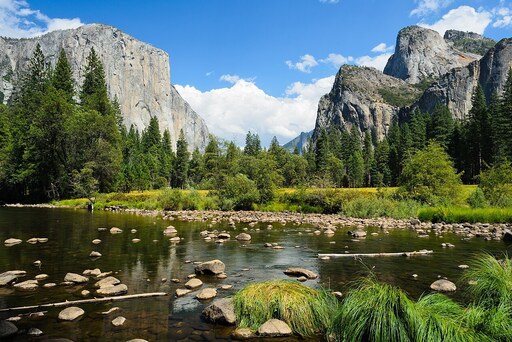
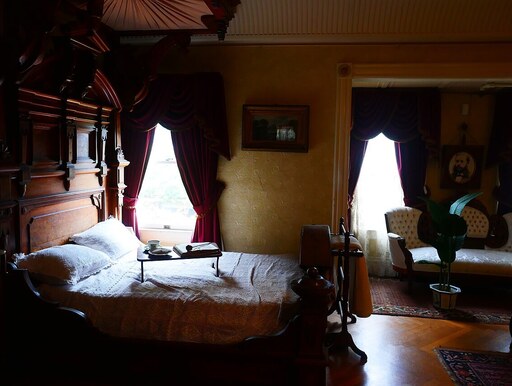
This is dense semantic segmentation: not "cut out the subject" and not "mask the thing
I clicked" — every single pixel is classified into one of 150 everyday scene categories from
ADE20K (sky, road, person, building, tree, wall, floor, car…). Drop a photo and watch it become
a colour-blocked map of what's where, entirely on your device.
WebAssembly, Web Workers, Canvas, FileReader — all Baseline widely available
Run it
Pick or drop a photo and hit Segment. Every pixel gets a class; the map is drawn over your photo. Slide the opacity to fade between the photo and the pure colour map.
Drop a photo here, or click to choose
Class legend
Run segmentation to label the scene.
backend –latency –classes found –map resolution –
See inside
SegFormer outputs a score for every one of the 150 classes at every pixel, then takes the
argmax — the winning class per pixel — to make the label map. On the left is
that label map on its own (the raw model output, no photo). On the right, the class distribution:
how much of the frame each class claimed. That coverage vector is a compact "what kind of scene
is this?" signature you can feed to other logic.
Run segmentation to see the label map and class distribution.
Argmax label map (raw output)
Per-class coverage
Why it matters
A per-pixel scene map is the raw material for a surprising number of features — and having it run
locally means you can label a photo, or a video frame, without an upload or an API bill.
Sky & background replacement — select every "sky" pixel and swap it, or blur everything that isn't "person," on-device.
Scene understanding — the coverage vector ("60% building, 20% road, 10% sky") tells an app what kind of place a photo shows, for tagging, search, or routing.
Mapping & mobility — separate road from sidewalk from vegetation in street imagery for accessibility routing, surveys, or driving assist prototypes.
Photo & video editing — apply an effect to only the "grass," relight only the "wall," or grade the "sky" — region-aware edits without manual masking.
Semantic segmentation is a one-liner with Transformers.js. The pipeline returns one entry per class present, each with a full-resolution mask:
import { pipeline } from "@huggingface/transformers";

const segment = await pipeline(
  "image-segmentation",
  "Xenova/segformer-b0-finetuned-ade-512-512",
); // downloads + caches ~15 MB once

const output = await segment(imageURL);
// → [{ score: null, label: "sky",   mask: RawImage },
//    { score: null, label: "tree",  mask: RawImage },
//    { score: null, label: "road",  mask: RawImage }, … ]
//   each mask is 0/255 for that class; together they tile the whole image
This page runs that in a Web Worker, then folds the per-class masks into a single colour-coded
overlay and a per-class pixel count — so the map, legend, and coverage bars are all just views of
the one label map the model produced. Nothing is uploaded.