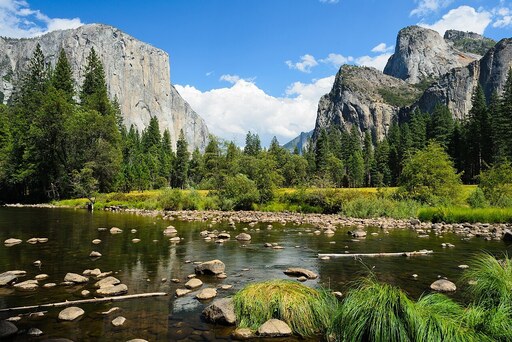
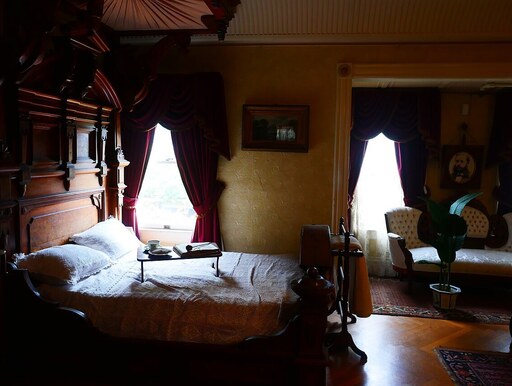
wild · text-prompted segmentation
Because CLIPSeg rides on CLIP's language understanding, the prompt doesn't have to be a
concrete object. Ask for the warmest area, the safest place to walk, or
where to look first and it will still paint a heatmap — its best guess at where that
idea lives in the pixels. Some hits are uncanny; some are nonsense. That's the fun.
Abstract prompts score low and diffuse in absolute terms, so here the field is normalised per image (each map stretched to its own min–max) — you're seeing where the signal concentrates, not a calibrated probability. The threshold is that relative intensity; the readout still reports the true peak sigmoid.
CLIPSeg conditions a segmentation decoder on a CLIP text embedding. CLIP learned those embeddings from hundreds of millions of image–caption pairs, so "cozy", "dangerous", or "warm" already point somewhere in its visual space. The decoder just asks "which pixels look most like that?" Treat the result as vibes, not ground truth — but it's a striking demo of language steering pixels, with no labels in sight.