Nougat is OCR done the way a person reads a paper: a vision transformer looks at an
entire scanned page and a text decoder writes the page back out as structured Markdown —
headings, prose, tables, and the equations preserved as LaTeX — one token at a
time, entirely on your device.
Donut-Swin image encoder (896×672) → mBART-style text decoder — a VisionEncoderDecoder with cross-attention (~250M params)
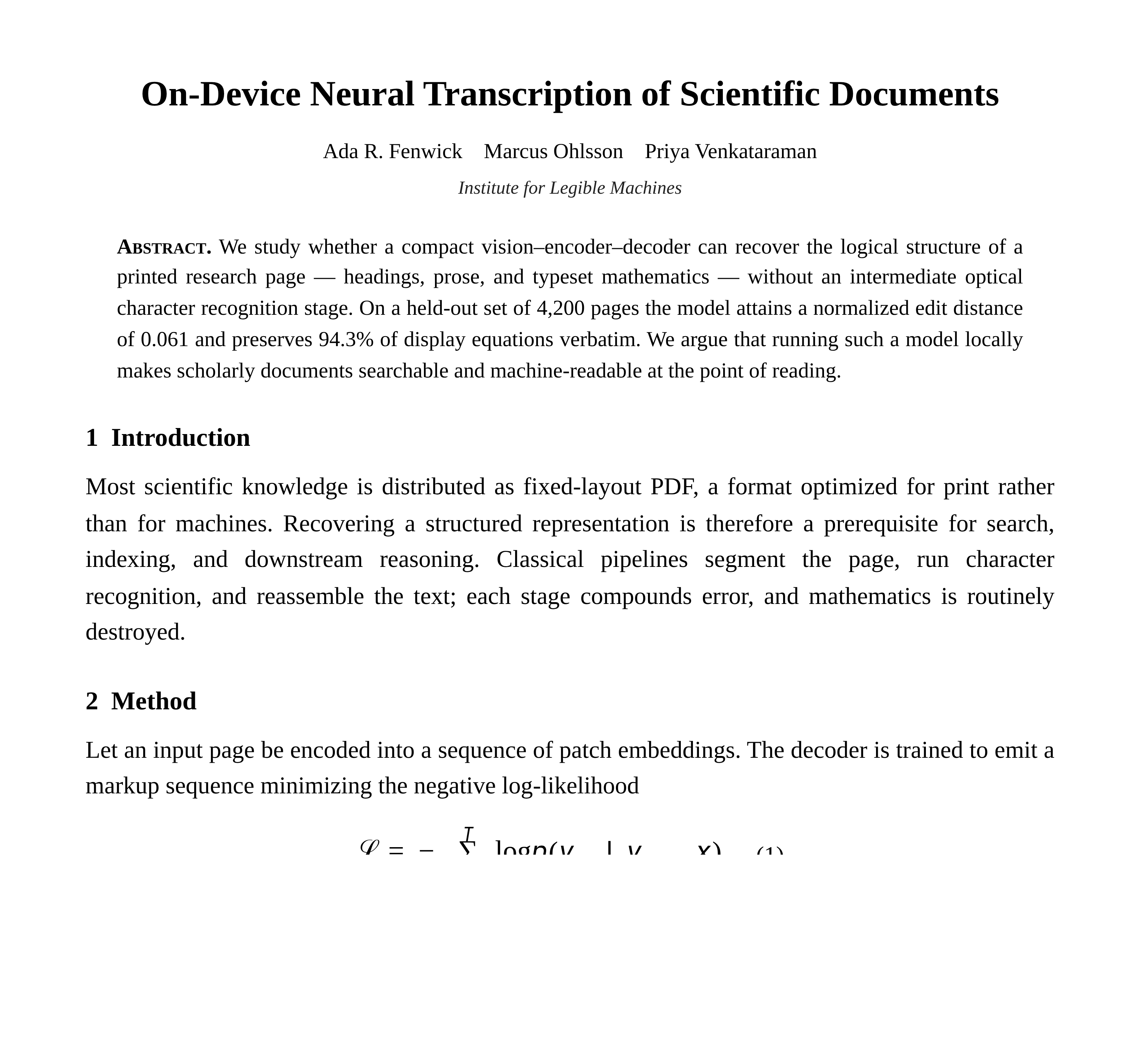
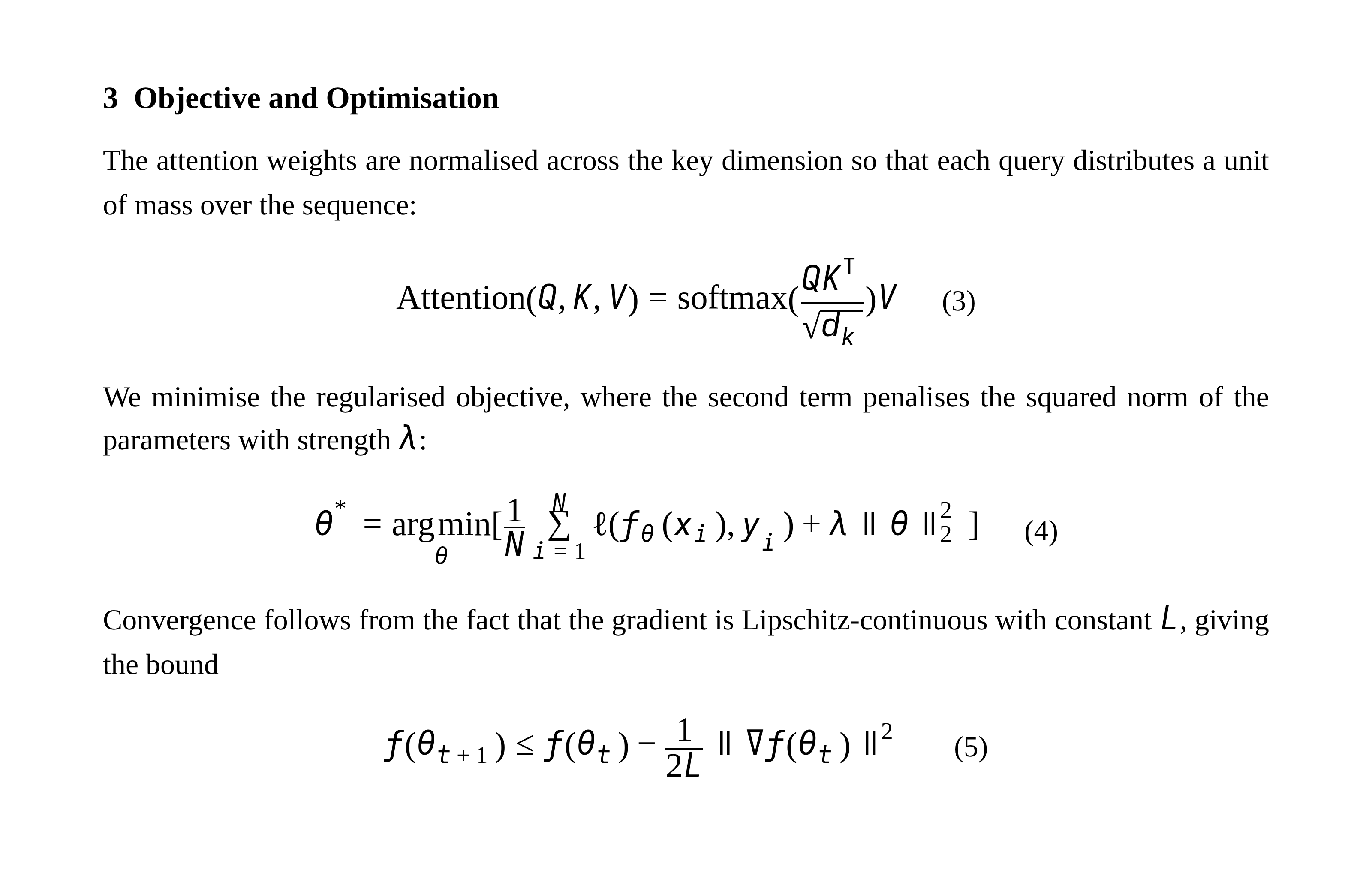
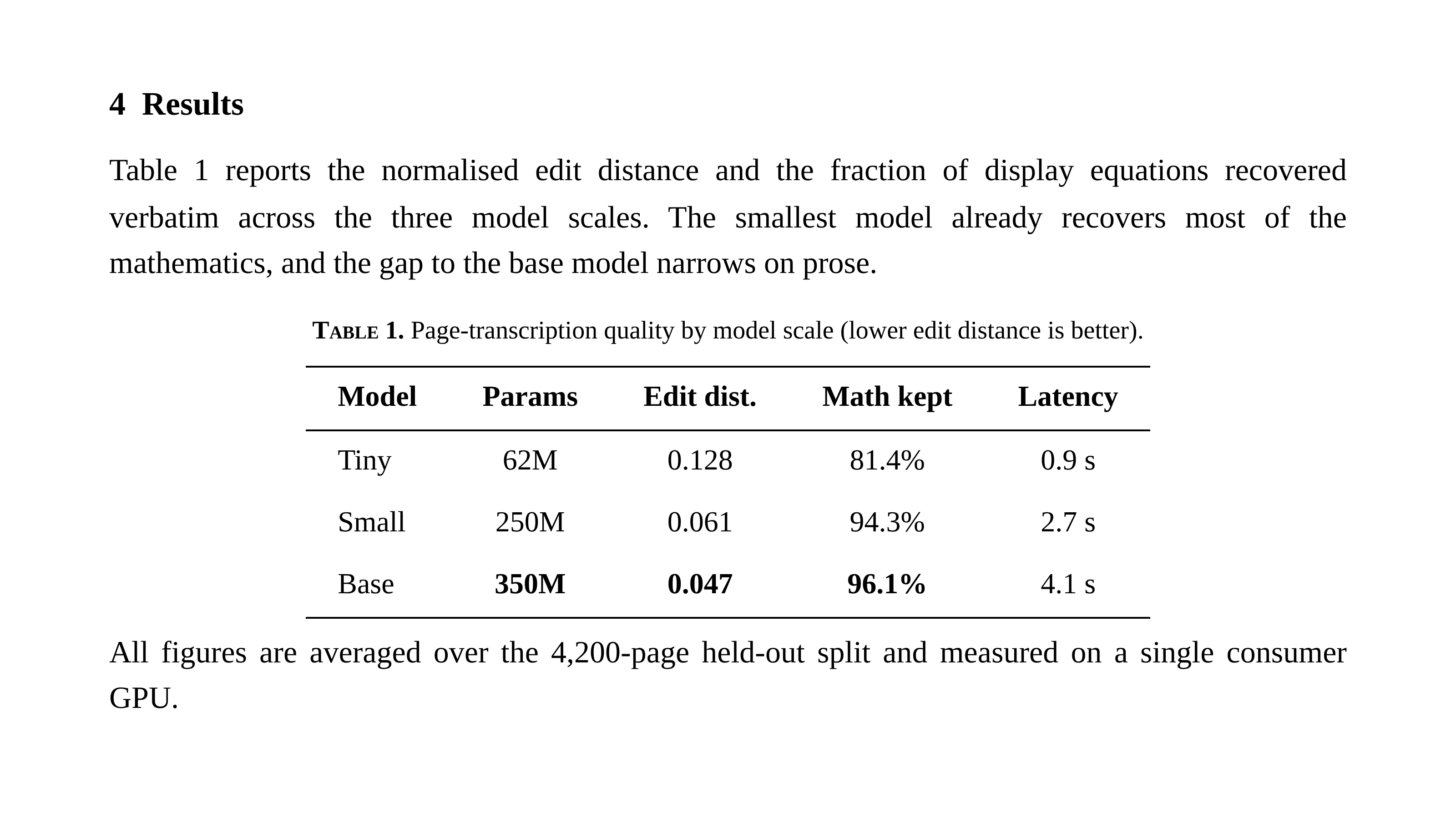
Input
A whole document page image (a scanned/rendered research page works best)
Output
The full page as Markdown, with math kept as inline \( … \) / display \[ … \] LaTeX
Quantization
q8 (8-bit) ONNX — separate encoder + decoder graphs
Backend
WebAssembly (runs anywhere; no WebGPU needed)
Download
~250 MB (77 MB encoder + 165 MB decoder), cached after first load
License
CC-BY-4.0 (facebook/nougat-small)
Web APIs
WebAssembly, Web Workers, Canvas, FileReader — all Baseline widely available
Run it
Pick a page below or drop your own, then hit Transcribe page. Nougat reads the
whole page at once (not a single line), so give it a full page image. Watch the Markdown form
token by token, then flip between the rendered view and the raw Markdown+LaTeX.
Drop a page image here, or click to choose
A full page is long — more tokens transcribe more of it, but take longer.
The transcribed page will appear here.
backend –tokens –math spans –total –speed –
See inside — the token stream and the structure it builds
Nougat is autoregressive generation, not character matching. The encoder reads
the page into patch embeddings once; then the decoder emits Markdown one token at a time, each
conditioned on the image and everything written so far — which is how it knows to open a
# heading, lay out a | table, or drop into \( … \) for
math. The trace shows every token as it arrived, with elapsed time; the panel beside it counts the
structure that emerged.
Transcribe a page to see the token-by-token trace.
Decoded tokens (streamed):
First token
–
Tokens/sec
–
Headings
–
Display equations
–
Inline math
–
Tables
–
Why it matters
The world's science is locked in fixed-layout PDFs. Plain OCR can pull the words out, but it
destroys exactly what makes a paper a paper: the headings that give it structure, the tables that
hold the results, and the mathematics — which OCR turns into a soup of stray symbols. Nougat keeps
all of it, and running it locally means you can do that to a document you'd never upload.
Make papers machine-readable — turn a scanned page into clean Markdown you can search, diff, index, or feed to an LLM.
Rescue the math — recover equations as LaTeX you can paste straight into a paper, a notebook, or a renderer — not a mangled image caption.
Accessibility — give screen readers real structure and real math instead of a flat image.
Private by default — transcribe a confidential draft, a medical report, or an internal spec without it ever leaving the device.
The important bit is the input: Nougat expects a whole page, not a single line —
its encoder is fixed at 896×672 and it's trained on full research pages. This page passes a
TextStreamer into the same call so "See inside" can render the Markdown as it forms
and time each token, and it does all of this off the main thread in a Web Worker. The raw output
is GitHub-flavoured Markdown with LaTeX math delimited by \( … \) and
\[ … \] — this page renders the structure and keeps the LaTeX verbatim.