zero-shot-image-classification · vision + language · WASM · ~420 MB
SigLIP 2 — a newer, multilingual CLIP alternative
SigLIP 2 (Google, 2025) keeps SigLIP's sigmoid read-out — each label scored
independently, so two labels can both fire and "none of the above" is a real answer — but
pairs it with a fresher training recipe and a multilingual Gemma tokenizer. The
practical upshot: you can label an image in English, French, Japanese or Chinese and it lands in
the same shared space. Score any image against any labels, in any language, entirely on your device.
ViT-B/16 vision encoder + text transformer → shared 768-d space (the ONNX export declares model_type: siglip, so it runs on the existing SigLIP pipeline)
What's new vs SigLIP 1
Multilingual Gemma tokenizer + a stronger 2025 training recipe (self-distillation + captioning objectives)
Training loss
Sigmoid (pairwise), not softmax/contrastive — each label independent
Read-out
per-label logit = scale · cosine + bias, then sigmoid(logit)
Tokenizer
Gemma (multilingual), padded to a fixed max_length of 64
Quantization
q8 (8-bit) ONNX
Backend
WebAssembly (runs anywhere; no WebGPU needed)
Download
~420 MB, cached after first load
License
Apache-2.0 (Google SigLIP 2)
Web APIs
WebAssembly, Web Workers, FileReader — all Baseline widely available
Run it
Pick or drop an image, type comma-separated labels — in any language —
and hit Score. Each bar is an independent sigmoid probability; they don't add up to
100%. Bar length is drawn relative to the top label so the small scores stay visible; the number is
the true probability.
Drop an image here, or click to choose
SigLIP 2 base (q8) is
very conservative — its sigmoid scores run low (a clear match often sits under 1%), but
the ranking and logit gap between a match and a non-match are large and clean.
Trust the order and the "See inside" logits, and set the threshold to fit your labels.
backend –latency –labels –matches –
See inside — cosine → logit → sigmoid, plus the softmax CLIP would use
SigLIP 2 turns your image into one 768-number vector and each label into its own, then takes the
cosine between them. It scales that cosine by a learned temperature and adds a
learned bias to get a logit. Then it squashes each logit through an
independent sigmoid (its training objective), so every label is a standalone
yes/no. CLIP would instead run a softmax across all labels, forcing them to compete
and sum to 100%. Same logits, two different answers — and the logit column is where SigLIP 2's clean
match/non-match separation lives.
Run a scoring to see the raw numbers.
image embedding –text embeddings –learned temperature –learned bias –
Label
cosine
logit
sigmoid (SigLIP)
softmax (CLIP-style)
The sigmoid column can total more (or far
less) than 100% — that's the point. The softmax column always totals 100% because it makes the
labels fight over a fixed pie. Notice the softmax still crowns a clear winner even when every
sigmoid is tiny.
Why it matters
SigLIP 2 inherits everything that made SigLIP a better tagger than CLIP — independent per-label
sigmoids, a real "reject everything" state, cheaper training at scale — and adds the piece most
real products need: languages other than English. The label set is still just an
input you decide at runtime, now in whatever language your users speak.
Multilingual tagging & moderation — score against policy labels written in
the market's own language, no translation step, no server round-trip.
Multi-label tagging — a photo really can be beach,
sunset, and people at once; independent sigmoids let all three fire.
Cross-lingual search — the same image lines up with "dog", "chien", "perro" and
"犬" because they share one embedding space.
Private, offline, free — the image and the labels never leave the tab.
The pipeline call is identical to SigLIP/CLIP — the model id is the only change:
import { pipeline } from "@huggingface/transformers";

const classify = await pipeline(
  "zero-shot-image-classification",
  "onnx-community/siglip2-base-patch16-224-ONNX",
); // downloads + caches ~420 MB once

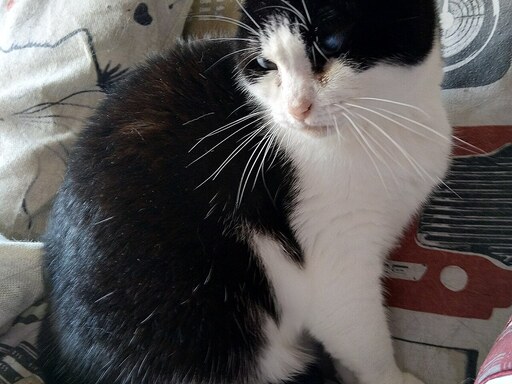
const output = await classify(imageURL, ["a cat", "un chat", "猫"]);
// → [{ label: "a cat", score: 0.009 }, …]
//   Each score is an INDEPENDENT sigmoid probability — they need not sum to 1.
For "See inside" this page reuses the pipeline's own model, processor, and tokenizer to read the raw
logits_per_image and the image/text embeddings from a single forward pass — then it
computes the sigmoid (SigLIP's real read-out) and a softmax over the same logits so you can
see how differently the two objectives answer. SigLIP 2's Gemma tokenizer reports a
model_max_length of 1e30, so we pad explicitly to max_length: 64 (the
length SigLIP trained on) — the pipeline's default padding would otherwise throw. Inference runs in
a Web Worker so the page never janks.