Basics: every label gets its own probability — in any language
Give SigLIP 2 a picture and a list of words. Unlike CLIP, it doesn't force the words to compete —
each one gets an independent 0–1 score. And because SigLIP 2 is multilingual, those words can be in
English, French, Japanese or Chinese. The demos below make it concrete: the scores themselves, then
the exact same logits run through SigLIP's sigmoid versus CLIP's softmax, side by side.
1 · Score an image against your labels
…or drop / choose your own
Try a preset:
backend –latency –matches –
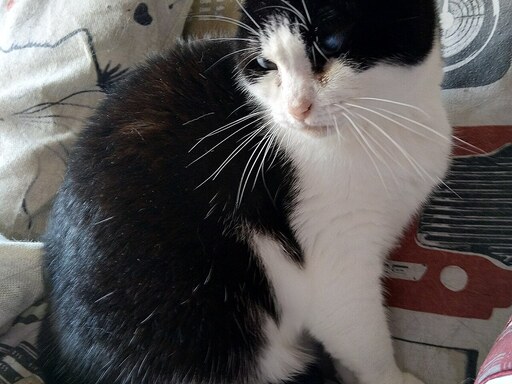
Try the cat vs dog · 3 languages preset on the cats image: "cat", "chat" and "猫" all
rank near the top while every dog word sinks — one shared space, three languages. SigLIP 2 base (q8)
scores are small in absolute terms, so bar length is drawn relative to the top; the number is the true
independent probability. Try all irrelevant: every bar stays near zero — SigLIP is
allowed to say "none of these."
2 · The same logits: sigmoid (SigLIP) vs softmax (CLIP)
Both compute a logit per label. SigLIP squashes each logit with an
independent sigmoid; CLIP runs a softmax across the whole set. Run
demo 1 above, then read across: the sigmoid column need not total 100%, the softmax column always does.