ViTPose — a plain transformer that finds 17 body keypoints
ViTPose skips the hand-built pose architecture: it's a plain Vision Transformer with a tiny
decoder head. Give it a person and it emits one heatmap per keypoint — the
joint is simply the hottest cell. This is a top-down estimator (a different design from
the MediaPipe PoseLandmarker): feed it a
person box, get back 17 COCO keypoints and a skeleton, all on your device.
WebAssembly, Web Workers, Canvas, FileReader — all Baseline widely available
Run it
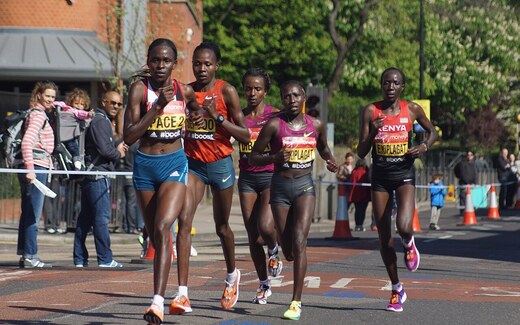
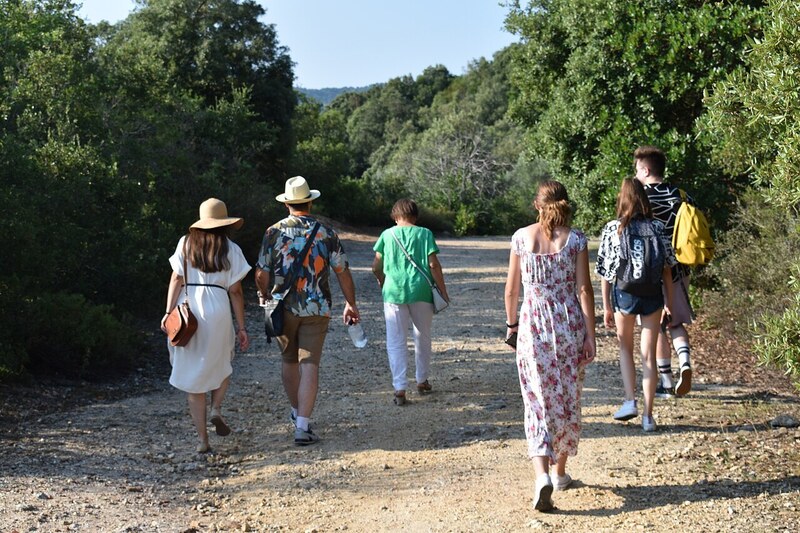
Pick a sample or drop a photo of a person, hit Detect pose, and the 17-point skeleton is drawn straight onto the canvas. The slider hides low-confidence joints.
Drop a photo of a person here, or click to choose
backend –latency –people –visible joints –
See inside — heatmap → arg-max
ViTPose doesn't regress coordinates directly. For each of the 17 keypoints it outputs a small
64×48 heatmap — a probability surface over the person box — and the keypoint is
the arg-max (the single hottest cell), rescaled back to image pixels. The
confidence is that peak value. Pick a joint to see its real heatmap and where the peak landed.
Detect a pose to see its keypoint heatmaps.
#
keypoint
confidence
Why it matters
Pose estimation used to mean a depth camera or a cloud vision API. ViTPose shows that a plain
transformer — the same ViT family behind image classification — is a state-of-the-art pose
estimator with almost no task-specific machinery. That makes "where is this person's body?" a
local function call, private and offline.
Fitness & physio — check squat depth, plank alignment, or arm angle from joint coordinates, with nothing uploaded.
Sports & dance analysis — compare a learner's joints to a target and score the match, frame by frame.
Ergonomics & safety — flag slouching or unsafe lifting posture from shoulder/hip/knee angles, on-device.
Crowd pose — pair a person detector with ViTPose to estimate everyone in a scene, each from their own crop.
ViTPose isn't a one-line pipeline — it's a model + image processor. You pass a person box; the processor crops and normalises, the model emits heatmaps, and the processor decodes them into keypoints:
This page runs exactly that in a Web Worker, and keeps the raw heatmaps tensor so "See inside" can show the arg-max decode. For multiple people, pass one box per person (see the multi-model demo).